2025 Tax Resources
As you prepare your information for the processing of your 2025 return, please use these complimentary resources. Simply download the PDF(s) and complete them with your information prior to returning to us with your tax data.
Brent Snyder joined Canon Capital in October 2024, bringing over 25 years of expertise in the technologies field. He was promoted from Operations Manager to Director of Technologies in 2026. Brent holds a B.A. from Temple University and is a graduate of their Fox School of Business. An active community member, he serves on the Board of Directors for Harleysville Baseball and #IronDad23, a non-profit helping local families and students in the Souderton Area School District. He lives in Souderton with his wife, Laurie, their sons, Chase and Austin, and their cat, Snickers. Outside of work, Brent enjoys cheering on all Philadelphia sports teams, watching his sons play sports, and plans to visit every Major League Baseball park with his family, having checked off seven so far.
Growth is a good problem to have. When you’re winning new contracts, experiencing rising revenue, and growing a team, everything looks like it’s moving in the right direction. On paper, that is.
From a CPA’s perspective, however, rapid growth is one of the most common reasons Pennsylvania business owners are caught off guard by unexpected tax bills and cash-flow strain.
The issue isn’t growth itself. It’s how quickly the rules change when your numbers do.
Why Growth Can Tighten Cash Flow
One of the biggest misconceptions we see is simple: more revenue automatically means more available cash. In reality, fast growth often reduces short-term cash flexibility, even when profits increase.
Why?
Taxes scale quickly. As income rises, so do federal and Pennsylvania estimated tax payments. Payroll taxes grow with each new hire. Additional local earned income tax filings or Local Services Tax obligations may be triggered if your business expands into new municipalities. Without early planning, those changes often show up as a surprise notice or a much larger than expected tax payment.
Timing matters. Revenue is taxed when it’s earned, not when cash is collected. If receivables lag while payroll, rent, and vendor expenses rise, cash can feel tight during your most successful months.
Spending accelerates before strategy adjusts. Growth often requires quick decisions: hiring staff, purchasing equipment, upgrading technology, or outsourcing services. How those costs are treated for tax purposes (deducted, capitalized, or depreciated) has a direct impact on taxable income.
Your structure may no longer fit. An entity set-up or owner compensation strategy that worked at lower revenue levels may be inefficient as profits grow. Retirement contributions, pass-through income planning, and payroll strategy often need to be revisited sooner than expected.
None of this means something is wrong. It simply means your financial picture has changed and your tax strategy needs to change with it.
When Business Owners Usually Call Their CPA
Many business owners reach out only after growth has already happened, when:
At that point, the CPA’s role becomes reactive instead of strategic. While issues can still be addressed, opportunities around timing deductions, payroll strategy, or estimated tax planning may already be limited.
Call Your CPA Before You Commit
A short CPA conversation before a major growth decision can prevent months of stress later.
Early input matters most when:
A brief planning discussion at this stage often saves far more than it costs.
What CPA Growth Planning Actually Covers
From the CPA side, planning isn’t about slowing growth. It’s about removing friction. That planning often includes:
The goal is predictability, not perfection.
Growth Is Easier When Taxes Aren’t A Surprise
Fast growth should feel exciting, not stressful. The businesses that navigate it most smoothly are the ones that involve their CPA early and treat tax planning as part of growth planning.
Growth changes your numbers. A proactive CPA helps make sure it doesn’t change your sleep.
Planning for Growth? Talk It Through
If your business is growing quickly, or preparing to sign a major new contract, a short planning conversation can help clarify the tax and cash-flow implications before they become problems.
Our CPA team here at Canon Capital Management Group works with business owners to align tax strategy, cash flow, and growth decisions so success doesn’t come with surprises.
Have questions? We’re happy to talk. Contact us online or call 215-723-4881.
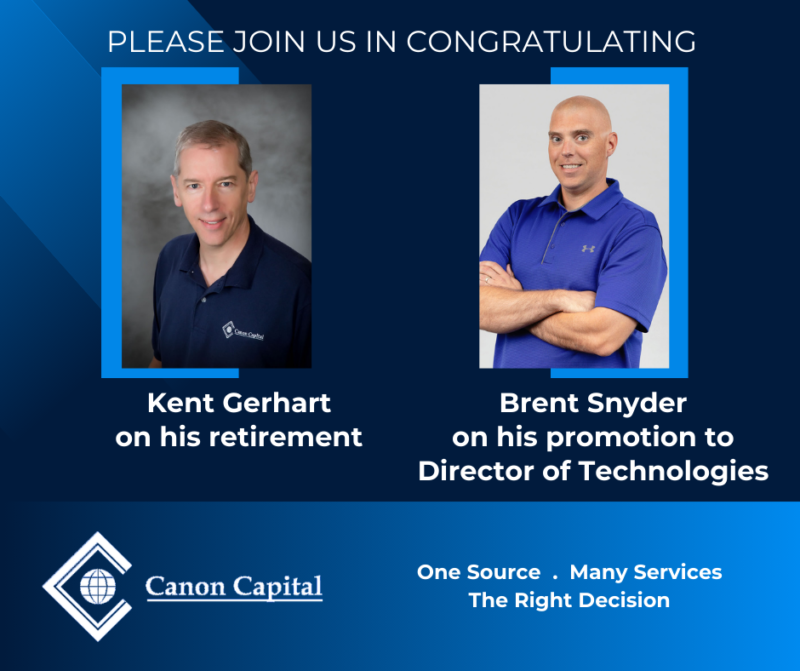
Kent Gerhart has retired from his role as Director of Technologies after more than 35 years in the technology field and over two decades with Canon Capital Management Group. Since joining us in November 2000, Kent has been a steady presence behind the growth of our technology division, helping clients adapt as systems, security, and infrastructure evolved over the years. His career spans roles as a programmer, analyst, and consultant, as well as ownership of KenTech Information Systems, Inc., an experience that shaped his practical, client-first approach.
 As he enters retirement, Kent is looking forward to a new and meaningful role as a part-time caretaker for his first grandchild while continuing to work part-time in his custom woodworking business.
Brent Snyder has been named our new Director of Technologies. He joined Canon Capital Management Group in October 2024, bringing more than 25 years of experience in technology and operations. Brent holds a B.A. from Temple University and is a graduate of the Fox School of Business. Brent continues to demonstrate the strong leadership, operational expertise, and customer-focused approach that our clients have come to expect.
Brent is active in the local community, serving on the boards of Harleysville Baseball and #IronDad23, a nonprofit supporting families in the Souderton Area School District. He lives in Souderton with his wife, Laurie, and their two sons.
We thank Kent Gerhart for his lasting contributions and look forward to continued growth and innovation under Brent Snyder’s leadership.
The web based support form is no longer in use. Please use the green IT button on your Windows desktop or system tray to submit a support request. If you do not have the green IT button, please give us a call at 215-723-4881, extension 800, and we will be happy to assist you.
In an effort to support our environment, provide our customers with a cost-effective, easy way to dispose of their unused computer equipment and comply with local equipment disposal laws, we are announcing a new computer equipment recycling program. Here’s how it works:
At your request, we will recycle your used computer equipment for you. Computers will have their hard drives rendered inoperable (so that there is no possibility of anyone extracting data from them). We will then transport your equipment to a certified computer equipment recycling center for proper disposal.
To encourage as much participation in this program as possible, we are keeping the fee for this service to a minimum. To have your computers recycled, simply:
Vicki joined Canon Capital in August, 1999 and is responsible for overseeing the daily operations of Payroll Services. Vicki has an Associate’s Degree in Accounting from Montgomery County Community College and has earned the Certified Payroll Professional designation. She is a member of the national American Payroll Association as well the Lehigh Valley Chapter, where she served as Secretary from 2006-2013. Vicki resides in Sassamansville with her husband and son and enjoys crafts, reading, and kayaking in her free time.
For many businesses, independent contractors remain an important part of the workforce. As we move into 2026, the rules themselves aren’t brand new but enforcement, reporting expectations, and misconceptions continue to trip up otherwise well-run companies. That’s where a strong payroll partner can make a meaningful difference.
When payroll is involved early and consistently, contractor compliance becomes a managed process rather than a year-end scramble.
Misclassification is still the biggest risk
Federal agencies continue to pay close attention to worker misclassification because it directly impacts payroll taxes, wage laws, and benefits eligibility. While business owners may think of classification as a legal or HR issue, payroll often sits at the center of the practical realities: how workers are paid, how often, and under what conditions.
From the payroll side, our role is to help clients pause before defaulting to a 1099 designation. We look at factors such as behavioral control, financial independence, and the overall nature of the working relationship. While payroll providers don’t “decide” classification in isolation, we help surface red flags early, before they become IRS or Department of Labor problems.
Threshold changes don’t eliminate responsibility
One notable change affecting 2026 reporting is the increased dollar threshold for certain 1099 filings, which rose from $600 to $2,000 for payments made after 2025. While that may reduce the number of forms issued, it does not reduce the importance of tracking contractor payments accurately throughout the year.
This is where payroll support matters. Even if a contractor ultimately falls below the reporting threshold, businesses still need proper documentation on file, including a completed W-9, accurate tax identification details, and clear payment categorization. Payroll systems are designed to track this information consistently, rather than relying on spreadsheets or memory in January.
Clearing up common misconceptions
Even in 2026, we continue to see a few persistent misunderstandings:
A proactive payroll approach
When payroll is integrated into contractor management, businesses benefit from standardized onboarding, cleaner records, and fewer surprises. Our goal is to handle as much of the administrative burden as possible, so business owners can focus on operations, not compliance anxiety.
If you’re entering 2026 with a growing mix of employees and contractors, now is the right time to review how payroll supports that structure. A small adjustment today can prevent costly corrections later.
Our team of certified public accountants, certified management accountants, and chartered global management accountants work with you to understand your goals – personal and business.
You didn’t start a business to run a payroll company. We stay up-to-date on the latest tax rates and payroll practices so you don’t have to. Our efficient, cost-effective payroll services allow you to continue working on your business goals.
We take the worry out of your computer system management. From cyber threat management to data back-up, we work with you to address your concerns and make sure your systems are working for you.
Lori began working at Canon Capital in September 2022, bringing over 30 years of experience in corporate and partnership tax preparation and financial statement review. Lori earned her BS in Business Administration from Kutztown University and is a member of PSTAP (Pennsylvania Society of Tax and Accounting Professionals). A Perkasie resident, she relaxes by paddleboarding, doing yoga, baking, gardening, and hiking. Lori also enjoys spending time with her son, Collin, and her two mini Goldendoodles, Reilly and Chewie.